Every morning at the school gate, a small hand lets go. A quick goodbye, a little wave… and then the child walks inside. A new part of the day begins.
What happens after that is not seen. It is only heard. The rest of the day is pieced together through fragments — a sentence shared at the dining table, a feeling expressed in the car, a half-told story that begins with, “today I was…” and fades into something else.
Inside the classroom, however, the day unfolds fully.
For the child, the transition is quiet but powerful. The moment the gate closes behind them, they step into a world that is entirely their own. Here, they make choices, form friendships, solve small problems, and experience little victories that may never be spoken about later. They learn how to wait, how to take turns, and how to try again when something does not work the first time. These moments do not always come home in words, but they stay.
For the teacher, these are the moments that matter most. It is not just the finished work, but everything that happens before it — the pause before answering, the excitement of getting something right, and the courage it takes to try. Growth is often quiet. It is seen in small shifts: a child who begins to participate more, one who learns to collaborate, or another who starts to work independently with confidence. These changes happen gradually, almost unnoticed, but they are deeply significant.
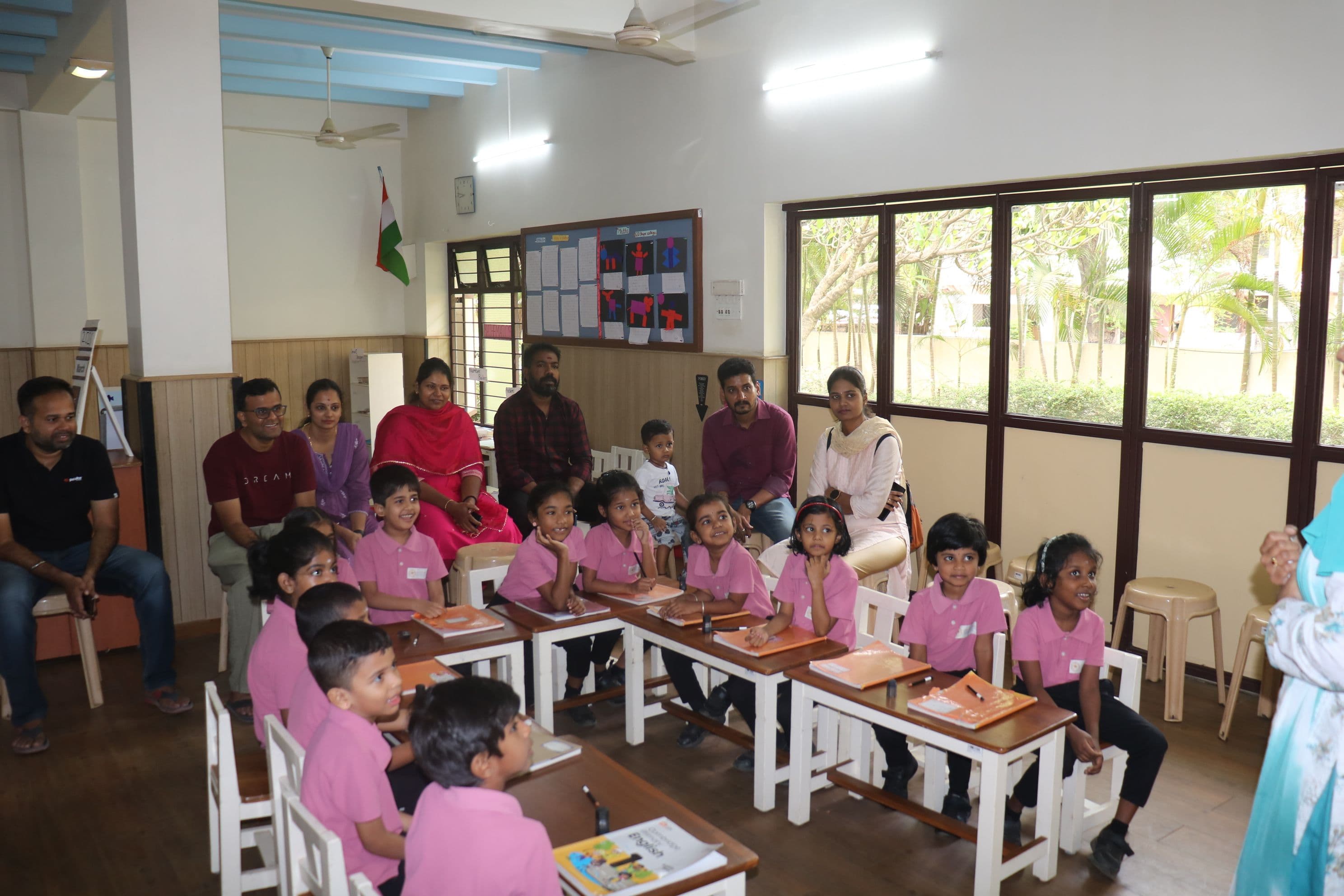
And then comes Open Day — A day when “the everyday world” can finally be seen. Not something specially prepared, but the same learning, the same moments, that have been happening throughout the year.
For parents, it becomes a moment of connection. Things that once sounded abstract now take shape. The stories they have heard begin to make sense. The classroom is no longer an imagined space; it becomes real, familiar, and full of meaning.
There is often a quiet realisation — so this is how it all happens.
And with that, a sense of pride begins to grow. Not loud or spoken, but deeply felt — in the way each moment is observed, in the way even the smallest details are noticed. The way a child sits with focus. The way they explain something with confidence.
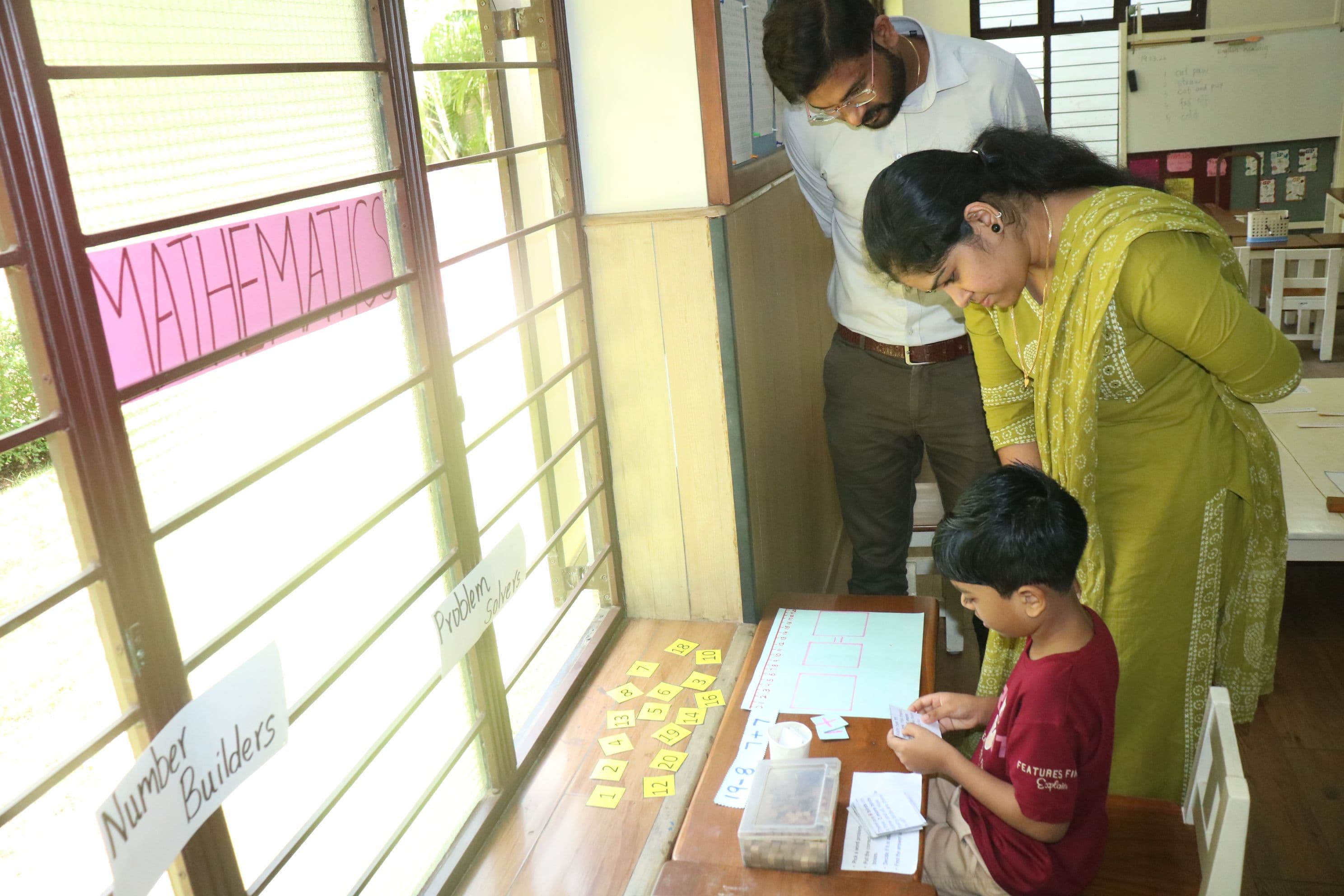
As the day unfolds, the classroom opens up into different experiences.
Each space holds more than an activity. It holds a story of growth, not just of what has been learned, but of who the child is becoming — a little more confident, a little more independent, a little more willing to try
For the classroom, this is just another day — the same rhythm, the same learning, the same small moments that happen again and again.
But for parents, it is something more. It is a window. A chance to see what is usually unseen. To understand what is usually only heard. To witness the everyday in its truest form. And in that moment, everything shifts. What was once imagined becomes visible. What was once heard becomes understood.
Because what is seen on Open Day is not something staged. It is a glimpse of everything that happens, every single day.